Web Annex
Companion materials, interactive tutorials, and research supplements
Tutorials
What Is Multicriticality? Tutorial Interactive
What happens when tipping points interact. Two coupled failure modes pull the safe operating boundary inward, so a system can fail before any single parameter reaches its threshold. Four live demonstrations.

The Magnetosphere Tutorial Interactive
Animated introduction to Earth's invisible shield. Solar wind, magnetic field lines, Birkeland currentsElectric currents that flow along Earth's magnetic field lines between the magnetosphere and ionosphere. They carry energy from the solar wind down to the aurora. Discovered by Kristian Birkeland in 1908, confirmed by satellite in the 1960s., reconnection, substorms, and why it matters for infrastructure. Seven scroll-triggered animated scenes.
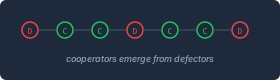
Coevolving Machines and the Social Threshold Tutorial Interactive
Interactive evolutionary game theory simulation based on John H. Miller's research. Explores how simple adaptive agents produce complex cooperative dynamics, phase transitionsAbrupt qualitative changes in a system's behavior at a critical parameter value. Water freezing, magnets losing magnetism, ecosystems collapsing — same mathematical structure, different substrates. in social systems, and the emergence of collective behavior from individual strategy.

Autocatalytic Closure for the Working Mathematician Tutorial
Kauffman's autocatalytic setsSelf-sustaining networks where every component is produced by reactions within the network itself. Nothing external is needed except a food set. The mathematical framework for self-organization across chemistry, biology, and computation. presented as formal mathematics. Covers RAF theory (reflexively autocatalytic, food-generated sets), closure properties, the percolation phase transition in random catalytic networks, and the connection to origin-of-life chemistry. Revised edition.
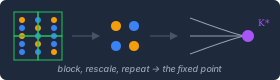
The Renormalization Group for the Working Mathematician Tutorial
Why a magnet, a fluid and a percolating network share the same numbers. Kadanoff blocking, flow in coupling space, fixed pointsA set of couplings unchanged by coarse-graining — a theory that looks identical at every scale. Critical points are the unstable ones, which is why criticality has to be tuned for. and why universalityDifferent microscopic systems sharing identical critical exponents. A consequence of irrelevant directions contracting under the flow — the microscopic detail is forgotten, and only dimension, symmetry and interaction range survive. is a theorem rather than a coincidence. Worked examples in 1D Ising decimation and the epsilon-expansion, a survey of the eight flavours of RG, and a clear statement of the four places the method does not reach.
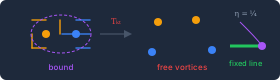
Kosterlitz–Thouless for the Working Mathematician Tutorial
A phase transition with no order parameter and no broken symmetry — the one a theorem says should not exist. Mermin–Wagner, vortices and the two-line argument, the Coulomb gas, the Kosterlitz flow with its line of fixed pointsUnlike an ordinary critical point, the entire low-temperature phase is critical, with a continuously varying exponent. Criticality here needs no tuning — it has codimension zero., the universal jump, the log-slow finite-size approach that fools a power-law fit, two-step melting, and why a topological transition is not a topologically ordered phase.
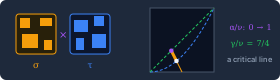
Ashkin–Teller for the Working Mathematician Tutorial
Two independent critical Ising copies, then one four-spin coupling of exactly the right kind: the critical point becomes a whole line of critical points. Dimension counting, exact marginality, the exact phase diagram with exponents read off as you drag, weak universality, and what a line with sliding and pinned exponents means for anyone reading variance indicators or fitted exponents off data.

Structure from Topology Tutorial
A systems-thinking worked example: how topological invariants constrain and predict the structure of physical systems. From abstract invariants to concrete observable consequences.

The ABR Kernel Tutorial Interactive
The ABR kernel by Robin Macomber (Origin), Kernel V9 development branch: arithmetic on observed arrows and nothing else; this page offers it as a shared footing for the question criticality fields ask: how far do correlations extend? Tried live on a three-point chain, and a side-by-side look at the criticality measures that six to twelve fields developed, by the preprint’s count. Two screens; the mathematics waits in accordions.

Where the Topology Lives Tutorial
How topological order emerges in two-dimensional systems. Covers the quantum Hall effect, anyonic statistics, braiding, and why topology provides error protection. Bridges abstract mathematics to the physical systems where these phenomena appear.
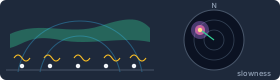
Reading the Sky from the Ground Tutorial
How a ground magnetometer array sees ionospheric currents: Hall and Pedersen currents, Fukushima’s theorem and the 90° rotation, induction in the ground and sea, and field-line resonances whose phase slides with latitude. Then eleven effects that make an array look as if something moves, and the estimators that test for motion — the delay-and-sum beam, f-k analysis, Capon beamforming — run live on a planted disturbance, with sensitivity sweeps and shuffled-array nulls.
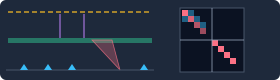
Many Instruments, One Sky Tutorial
How ground magnetometers, a satellite pass and a radar are combined into one estimate of the ionospheric current: forward models, spherical elementary current systems, damped least squares and priors, the resolution matrix, and a joint inversion where each instrument fixes what the others cannot see. Then how to check an inversion — planted truth, residuals, held-out stations — and two hours of real IMAGE data inverted live.
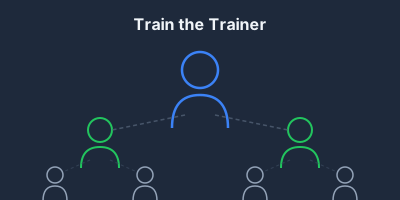
Claude Code Train-the-Trainer Program
Five-day intensive hands-on workshop, cohorts of 10. Your people become expert-level Claude Code trainers. They train everyone else. Permanent capability, not a recurring dependency.
What Breaks When You Run Agent Memory Tutorial
Field notes from operating a persistent-memory agent: the seven memory systems, six real failure modes — from a three-week silent data loss to a search-index compartmentation leak — and why governance is the third pillar of an effective agent. An incident log, not a taxonomy.

Governing Your AI Tutorial Interactive
Memory is solved. Governance isn't. How ungoverned memory produces sycophancy, context leakage, and correction decay — and the three architectural layers that make it safe. Includes failure matrix and a practical build path from 15 minutes to full system.

Physical Systems × Feature Chart Interactive
Interactive working document mapping ten physical systems against five feature clusters. Clickable matrix, coverage diagram, endpoint characterization, gap analysis, and research targets.
Autocatalytic Closure (Original) Tutorial
First edition of the autocatalytic closure tutorial. Superseded by the revised v2, retained for reference.

Fibonacci Anyon Fusion Algebra Tutorial Interactive
Animated introduction to the Fibonacci anyon model. Covers fusion rules (τ×τ = 1+τ), the Fibonacci dimension sequence, fusion trees, braiding as quantum gates, and the connection to topological quantum computationA model of quantum computing where information is encoded in the braiding patterns of quasiparticles called anyons. Because the braid's topology is a global property, local perturbations cannot corrupt the computation — fault tolerance is built into the physics, not bolted on.. Eight sections with replay-able SVG animations.

Anyon Algebra by Hand Worksheet Interactive
Eight worksheets for computing the same standard material the tutorial above introduces, rather than reading it. Three arithmetic-first labs (the golden ratio exactly, matrix multiplication one cell at a time, the Verlinde formula by hand), a five-part paper course with gates you have to pass, and four tutorials on the Fibonacci / Yang–Lee pair. Predict a number, then check it; your ticks and answers stay in your browser. Nothing here is new mathematics — it is standard topological quantum computation, roughly 1984–2009.

Shadows of the Poised State Research Interactive
Survey of twelve candidate systems scored against a five-feature framework. Six cross-cutting patterns, twelve falsifiable predictions with specific failure conditions, and a scorecard.
The Poised State and Its Critics Research Interactive
Has anyone seriously studied the poised state? A guided reading path through thirty years of claim and rebuttal, with an interactive latent-variable machine showing how one hidden driver manufactures a power law from units that are not coupled at all.

Four-Way Satellite Convergence Tutorial
SKT/STF boundary diagnosis using four independent satellite datasets. Cross-validation of magnetospheric tomography techniques with RBSP, Swarm, and IMAGE data.

Criticality Bridges — Physical Systems Tutorial Interactive
Six concrete physical systems where critical phenomenaThe behavior of physical systems near a phase transition — where correlations extend across the entire system, fluctuations diverge, and the system becomes scale-invariant. The same mathematical structure appears in magnets, fluids, neural networks, and ecosystems. demonstrably couple scientific domains. Gene regulatory networks, BZ reaction, cortical neural tissue, immune system, magnetic skyrmions, and Earth's magnetosphere.

Domain Convergence — An Animated Introduction Tutorial Interactive
How eleven scientific fields independently discovered different faces of the same physical phenomenon. Covers domain clusters, seven bridges, scale invarianceA system looks the same at every magnification — zoom in or out and the statistical structure is unchanged. Near a critical point, this self-similarity emerges spontaneously and connects microscopic physics to macroscopic behavior. It is the mechanism that makes universality possible. as stitching mechanism, the AC bridge structural identity, and the emergent property stack.

Content-Selective Search De-Indexing Report
Reproducibility report documenting content-selective removal of specific pages from search engine indices. Four test cases and two controls across Cryptome, Substack, and Slashdot, with methodology for independent verification.
Research
Domain Convergence Research Research Interactive
Systematic investigation into structural relationships between eleven scientific domains. Interactive tutorials, computational experiments (NKS braiding search, lattice dynamics, anyon family sweep), and key findings on cross-domain bridges.
Multi-Critical Systems Research Interactive
Six physical systems where critical phenomena, topological order, and autocatalytic closure co-occur: glass transition, active matter, cardiac tissue, protein folding, brain, and tokamak H-mode pedestal.
Letters
Design
$